

A GPS tracker tells you where a vehicle was. A GPS dash camera with video telematics shows what happened—time-stamped footage tied to speed and location—so fleets can resolve claims faster, coach drivers with evidence, and reduce preventable risk.
This guide compares GPS-only tracking vs video telematics and gives you a checklist for choosing an enterprise provider.
Traditional GPS Trackers: What They Do (And What They Miss)
Traditional GPS trackers focus on one primary function: tracking movement. For years, fleets relied on GPS to:
- Track vehicles
- Monitor speed
- Schedule routes
- Confirm arrival times
That visibility once felt sufficient. Today, it isn’t.
When accidents occur, customer complaints arise, or insurance claims are filed, a point on a map does not prove what happened. GPS coordinates alone cannot verify driver behavior, road conditions, or fault.
This is where GPS dashcams change the equation.
What GPS Trackers Do Well
Traditional GPS trackers help fleet managers:
- Track vehicle location in real time
- Log routes and direction of travel
- Monitor speed
- Create geofencing alerts
- Review trip history via software on a computer or phone
These tools remain useful for basic operations.
Where GPS Tracking Falls Short
GPS trackers cannot:
- Record video
- Capture events from multiple angles
- Prove what happened during accidents
- Verify false claims
- Protect drivers with visual evidence
When disputes arise, GPS-only data shows where a vehicle was—not what happened. Video paired with GPS provides context that helps resolve claims and complaints faster.
What Is a GPS Dash Camera (and How It’s Different)?
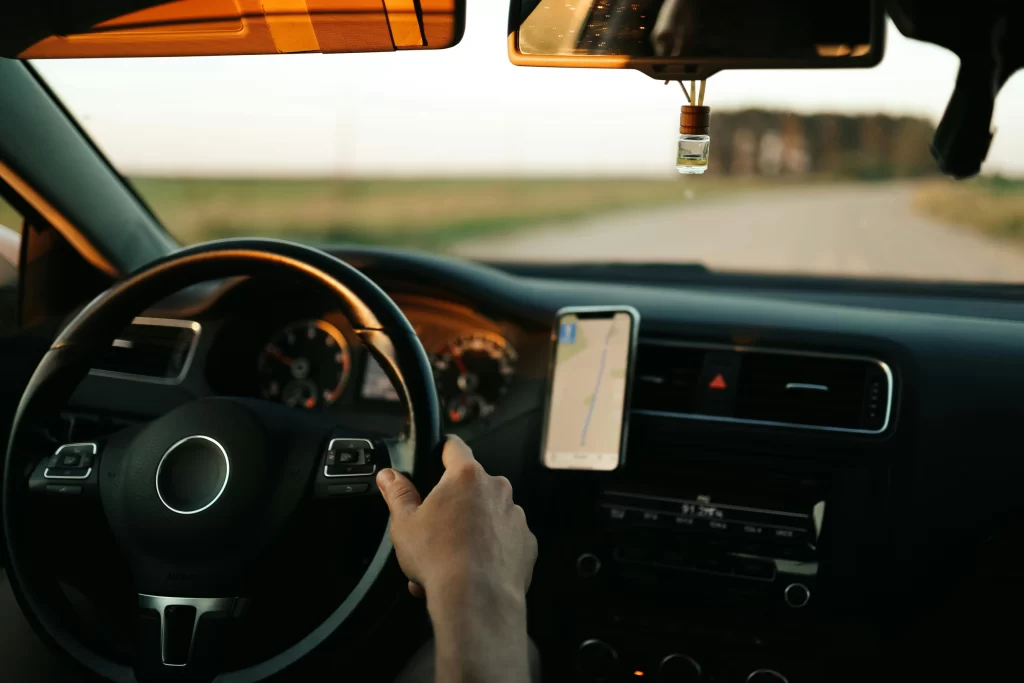
A dash cam records video of the road, the cabin, or both. A GPS dash camera goes further.
These devices:
- Record video continuously
- Capture speed, location, and direction
- Time-stamp every event
- Upload footage via Wi-Fi or LTE
- Store clips securely in the cloud
Unlike consumer dash cams designed for personal use, fleet-grade systems are built to:
- Run for hours without power drain
- Survive vibration, heat, and daily use
- Automatically upload critical footage
- Support managing drivers and employees at scale
Many modern GPS dashcams also include AI-powered detection that flags risky driving, distraction, or collision events in real time. Instead of scrolling through hours of footage, fleet managers review only the moments that matter.
Built-in GPS means the device automatically records your vehicle’s precise location, speed, and route. Built-in GPS capture is typically included with fleet dash cameras, while cloud storage and cellular upload may depend on your plan and retention settings.
When video and GPS are combined, you get a complete record of what happened, where, and when. GPS data pinpoints exact coordinates and timestamps for accident documentation, which is especially crucial in remote areas.
The shift is significant. Fleets move from passive tracking to active visibility. Every critical event becomes reviewable, verifiable, and actionable.
Key Features: GPS Tracker vs. GPS Dash Cam (Side-by-Side)
| Feature | GPS Tracker | GPS Dash Camera |
|---|---|---|
| Location tracking | Yes | Yes |
| Speed monitoring | Yes | Yes (records speed alongside video using GPS and/or vehicle data, depending on the system) |
| Video evidence | No | Yes |
| Accident reconstruction support | Limited | Stronger with video footage |
| Driver coaching | No | Yes |
| Cloud access | Basic | Full video + data |
| False claim protection | Weak | Strong |
| Insurance benefit | Limited | Varies by insurer/program |
Fleet-Grade GPS Dash Camera Checklist (What to Require From a Vendor)
Fleet managers evaluating an enterprise provider should look beyond camera specs. A fleet-grade GPS dash camera system needs to scale across vehicles, drivers, and locations—while protecting the business legally and operationally.
Camera Coverage Options (Road vs Dual vs Rear)
- Road-facing (minimum standard): Captures traffic conditions, lane position, signals, and the events that lead to collisions.
- Dual-facing (road + cab): Adds context for distraction, seatbelt use, or coaching scenarios (requires a clear privacy policy).
- Rear/side add-ons: Helpful for box trucks, delivery, and high-incident environments where backing and sideswipe claims are common.
Event Triggers and “Moments That Matter”
Require configurable event capture so managers aren’t digging through hours of normal driving:
- G-sensor events (impact, harsh braking, sharp turns)
- Driver behavior events (speeding, tailgating, rolling stops—if supported)
- AI-assisted detection (optional): distraction, phone use, drowsiness, near-miss flags
Upload Method (LTE/Wi-Fi) + Pre/Post Event Buffer
Enterprise fleets should confirm:
- LTE upload for timely incident review (especially in dispersed operations)
- Wi-Fi offload for depot-based bulk uploading
- Pre/post event buffering (e.g., 10–20 seconds before and after an incident) so you see what caused the event—not just the impact
Storage, Retention Controls, and Legal Hold
Your provider should support:
- Retention policies (by fleet, region, or vehicle type)
- Event-based retention (keep incidents longer than routine footage)
- Legal hold to preserve clips for investigations or claims without accidental deletion
RBAC, Audit Logs, and Secure Sharing Links
For enterprise use, footage access must be governed:
- Role-based access control (RBAC) (e.g., safety manager vs dispatcher vs admin)
- Audit logs showing who accessed, downloaded, or shared footage
- Secure sharing links (time-limited, permissioned access) for insurers, legal, or customers
Tamper Detection + Device Health Monitoring
Reliability is a fleet KPI. Require:
- Tamper alerts (camera unplugged, lens covered, forced reboot)
- Device health monitoring (connectivity status, storage status, last check-in)
- Automated notifications when a unit stops uploading or recording
Warranty, Replacement, and Support Policy
Ask vendors for:
- Warranty terms (hardware coverage, replacements)
- RMA/replacement speed (how fast a down unit gets replaced)
- Support + onboarding (training, installation guidance, escalation)
Buyer tip: If a provider can’t clearly explain retention controls, RBAC/audit logs, and fleet-wide device health monitoring, it’s usually a consumer solution being sold into a commercial environment.
Why Video Telematics Is Treated as High-Value Evidence
1) Accident & Incident Evidence
The value of video telematics isn’t theoretical. The National Transportation Safety Board (NTSB) has documented how commercial onboard video systems can capture critical crash-related information, including pre-crash behavior and vehicle motion, which supports stronger collision analysis and clearer accountability.
When accidents happen, video evidence paired with GPS data can help clarify:
- Speed
- Direction
- Right of way
- Driver behavior
- What actually occurred
In some contexts, fleets may use video as supporting documentation during investigations or disputes, depending on program rules and case specifics.
2) Insurance Claims & Premiums
On the insurance side, industry and regulatory sources describe how telematics data is used to evaluate driving behavior and risk, often through usage-based insurance (UBI) models. This context matters because it explains why some insurers and programs increasingly consider telematics data in underwriting and risk assessment (without guaranteeing discounts).
Some insurers and fleet programs may consider telematics or camera-based safety systems during underwriting or risk review. Premium impacts vary by insurer, fleet profile, and program. Footage can also reduce claim friction by speeding up investigations, reducing fraud, and lowering dispute costs. This is because footage:
- Speeds up claims
- Reduces fraud
- Lowers dispute costs
Telematics is widely used in usage-based insurance programs to assess driving behavior and risk. Discounts and premium impacts vary by insurer, fleet profile, and program.
3) Driver Safety & Culture
Dash cameras:
- Encourage cautious driving
- Help fleet managers coach drivers
- Identify risky habits early
- Improve safety culture across operations
Cameras can reinforce coaching and accountability when paired with clear policies and consistent review.
4) Better Fleet Management
Managers see what happens at loading docks, customer sites, and along routes. Video adds context to data, helping teams improve policies, training, and daily operations.
For fleets ready to add visibility without disrupting operations, Traxxis GPS Solutions provides integrated GPS tracking and video telematics built for commercial use.
How GPS Dash Cams Work in a Fleet Environment
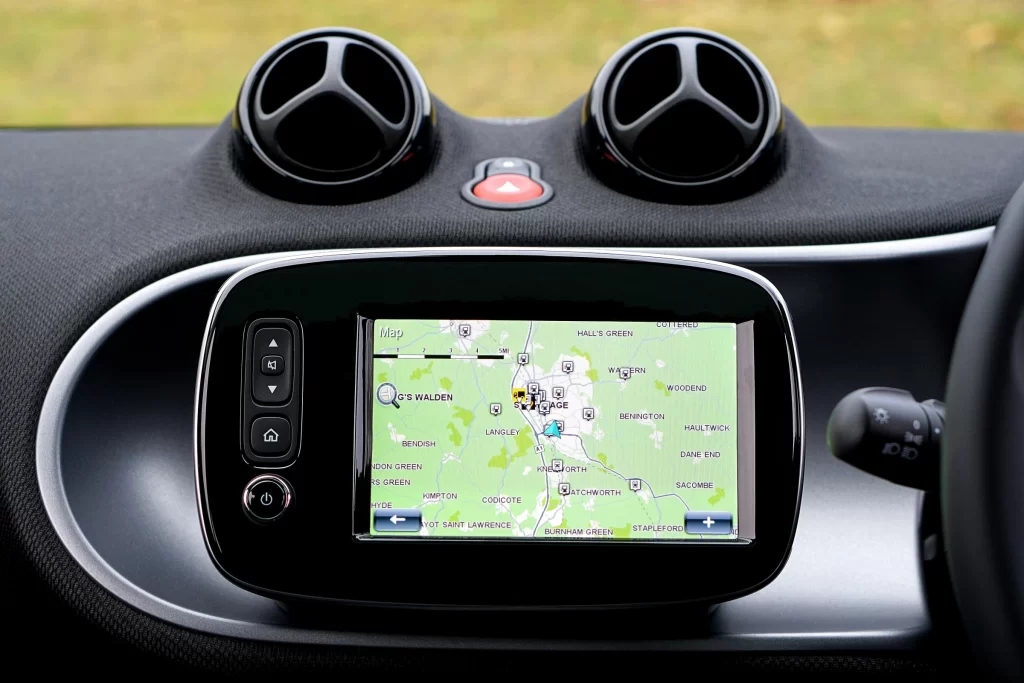
In a fleet setting, GPS dash camera systems function as always-on safety devices rather than passive recording tools. Once installed, the camera powers up with the vehicle ignition and begins to record automatically, removing reliance on drivers to manage devices manually.
Each camera captures continuous video and images while built-in GPS logs speed, direction, and location along the route. When predefined events occur—hard braking, sudden acceleration, or impact—the system marks those clips for priority review. This prevents managers from sorting through hours of uneventful footage.
Footage uploads through WiFi or cellular connection to cloud-based fleet software, giving managers secure access from a computer or phone. Clips download instantly when needed for reviews, investigations, or insurance documentation. This structure supports fast verification without disrupting daily operations or schedules.
Real-World Scenarios: When Dash Cams Beat Trackers
Real-world fleet operations rarely fail because of missing location data. They fail because of missing proof. Here are some scenarios where the comparison really matters.
- Intersection collision: GPS shows the point. The video shows who ran the red light.
- Customer complaint: GPS confirms arrival time. Video verifies driver conduct and service behavior.
- Sideswipe or hit-and-run: GPS tracks the route. Video captures the other vehicle and plate.
- Internal investigations: Video provides unbiased context without relying on assumptions.
These moments define why fleets expect more than tracking alone.
Choosing the Right GPS Dash Cam for Your Fleet
Fleet buyers should evaluate GPS dash camera systems based on coverage, evidence capture, upload reliability, retention controls, and access governance. Use the fleet-grade checklist above to compare vendors consistently across vehicles, regions, and driver groups.
Prioritize these fleet-grade decision drivers:
- Road vs dual-facing options (what you need to capture, and how you handle privacy)
- LTE/Wi-Fi upload + pre/post-event buffering (fast access to the full story)
- Retention + legal hold (keep incidents longer and preserve evidence when needed)
- RBAC + audit logs (control who can view, download, or share footage)
- Device health + tamper alerts (know when units stop recording or uploading)Installation, Use, and Accessories to Make Video Work at Scale
Installing at Scale
Standardized windshield mounting, clean cable management, and ignition-based power ensure consistent installs across vehicles.
Daily Use
Dash cams power on automatically, record without driver input, and follow clear privacy policies. Regular checks keep devices functioning properly.
Useful Accessories
- High-endurance SD cards
- Interior or rear-facing cameras
- Hardwire kits and protective housings
Proper setup prevents power drain and protects devices in demanding environments.
Cost and ROI: Why Upgrading from Trackers to Video Makes Sense
Dash camera systems cost more upfront than basic GPS trackers. The return appears over time.
Long-term benefits include:
- Reduced accident-related costs
- Faster claims resolution
- Reduced claim friction and dispute costs
- Fewer safety incidents and less downtime and fuel costs
Dash cams function as risk management tools, not simple devices. Fleets save money by preventing losses instead of reacting to them.
Why Fleets Choose Traxxis for GPS Dash Cams
Traxxis GPS Solutions delivers an all-in-one platform that unifies GPS tracking and video telematics.
Fleets gain:
- Centralized dashboards
- Real-time alerts and event visibility
- Secure cloud video management
- Local support, installation guidance, and training
Traxxis designs solutions for fleets that want clarity beyond dots on a map.
How a Traxxis Customer Reduced Fuel Costs with Better Fleet Visibility
CC Group is a service-focused fleet, used GPS-based fleet visibility to uncover inefficiencies that were quietly driving up operating costs. Before implementation, fleet managers had limited insight into how vehicles were actually being used day to day.
Routes were followed, but excessive idling, inefficient driving patterns, and inconsistent behaviors were difficult to verify or correct.
CC Group gained consistent visibility into vehicle location, speed, and route history across its operations. This data allowed managers to identify unnecessary idle time, inefficient routing decisions, and patterns that contributed directly to rising fuel costs.
With clear, and objective data, the company adjusted routes. This reinforced the driving expectations, and improved daily scheduling.
Over time, these operational changes translated into meaningful fuel savings and more predictable vehicle usage. Just as importantly, the fleet established a stronger accountability framework, drivers understood expectations, and managers could verify activity without guesswork.
When GPS tracking insights like these are paired with GPS dash cameras, fleets gain even greater clarity. Video adds visual context to driving events, supports driver coaching, and helps verify what actually happened on the road. Together, GPS data and video create a practical foundation for reducing fuel expenses, improving operations, and protecting the business.
The Future of GPS Dash Camera Technology for Fleets
GPS dash cameras are evolving from simple recording devices into proactive fleet management tools. Future systems focus on smarter categorization—road-facing, dual-facing, AI-enabled, and cloud-first models—allowing fleets to match devices to operational needs.
Emerging trends include AI-driven driver monitoring, event-based recording, faster cloud uploads, and deeper software integration with GPS tracking and fleet dashboards. These advancements reduce review hours, improve driver safety, and provide real-time insights into routes, fuel use, and operational performance.
For fleet leaders, this means safer drivers, faster incident verification, optimized schedules, and scalable systems that grow with your fleet. GPS dashcams are no longer just cameras—they are a strategic tool for managing vehicles, employees, and risk.
Ready to future-proof your fleet? Explore how Traxxis GPS Solutions combines video, GPS tracking, and real-time fleet management to take your operations to the next level: Contact Traxxis GPS today.
Frequently Asked Questions (FAQ)
1) How do GPS dash cameras improve fleet efficiency beyond safety?
GPS dash cameras don’t just document incidents — they improve day-to-day fleet performance. When video is paired with GPS and telematics data, managers gain visibility into idling, routing behavior, delivery timing, and driving habits that impact fuel consumption and service levels.
Fleet management systems that incorporate dash cameras often uncover inefficiencies that aren’t visible through GPS data alone. Over time, this leads to reduced fuel expenses, fewer unnecessary stops, and more consistent delivery times, especially when video-backed insights are used for coaching and route optimization.
2) Are fleet dash cameras difficult to install or maintain?
Fleet-grade dash cameras are designed for simple, standardized installation. Most units mount discreetly on the windshield, connect to vehicle power, and activate automatically with the ignition—no driver interaction required.
Once installed, dash cams provide ongoing peace of mind by continuously recording and automatically saving critical events. Unlike consumer cameras that are often treated as disposable and prone to failure within a year, enterprise systems are built for long-term use, using durable components and remote health monitoring to ensure reliability across large fleets.
3) How do fleet dash cameras record and store footage reliably?
Modern GPS dash cameras use several mechanisms to ensure critical footage is never lost:
- Loop recording, which continuously records by overwriting old files or non-event footage
- G-sensors, which automatically save clips during impacts or sudden stops
- Buffered recording, capturing several seconds before and after an incident
Many systems also support multi-channel recording, allowing fleets to capture road-facing, rear, and cabin views simultaneously. This creates comprehensive documentation of events without requiring manual intervention from drivers.
4) What technology features matter most for enterprise fleet use?
Fleet buyers should prioritize reliability and speed over consumer-grade features. Important considerations include:
- Supercapacitors instead of lithium-ion batteries, which are more reliable in heat and cold
- Wireless transfer via 5GHz Wi-Fi to enable much faster video downloads compared to standard connections.
- Multi-camera support, including dual-facing or rear cameras for broader coverage
- Parking mode to record events even when the car is off, often requiring hardwiring
These features ensure footage is available when needed — without slowing down operations or overwhelming managers with manual downloads.
5) Do GPS dash cameras help with insurance claims, legal protection, and compliance?
Yes. GPS dash cameras create a verifiable record of speed, location, and events, which is valuable during insurance claims, legal disputes, and internal investigations. Video evidence reduces ambiguity and helps resolve incidents faster than GPS data alone.
Some insurers and fleet insurance programs consider telematics and camera-based safety systems as part of risk evaluation, which may contribute to improved underwriting outcomes depending on the provider and program. Importantly, GPS data capture is typically included with fleet dash cameras, while cloud storage, cellular uploads, and retention policies depend on the service plan—not hidden usage fees.
Conclusion
GPS tracking tells part of the story. GPS dash cameras absolutely complete it.
Video brings accountability, improves safety, protects drivers, and saves fleets money. In a business where every incident affects cost, culture, and reputation, seeing what happened makes all the difference.
If your fleet is ready to move beyond tracking and gain real visibility, talk to Traxxis GPS Solutions today.
Book a demo or speak with a fleet specialist:
Contact Traxxis today!